The Garden Helper's 2012 Plants of the WeekEach week we will showcase a new plant that has a profile on The Garden HelperIf you like these quick peaks of the plants, please check out their full profile. You'll find many more profiled plants listed in the "More Plants and Flowers" column. Click on any photograph to enlarge. |
More Plants and FlowersOctober 2010November 2010 January 2011 February 2011 March 2011 April 2011 May 2011 June 2011 July 2011 August 2011 Plants of 2011 If you like this page, please tell your friends! |
January 1, 2012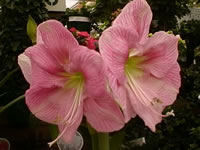 Amaryllis Hippeastrum       Nothing can break the gloom, like a beautifully blooming House Plant in the dead of winter. The Amaryllis is one of the easiest of all flowering bulbs to force into bloom, making them very popular as gift plants during the holiday seasons. Amaryllis produce 4-6 huge, showy flowers on bare, 1-2 ft. stems. They are very easy to maintain in the home. Hardy in zones 9-11 |
January 7, 2012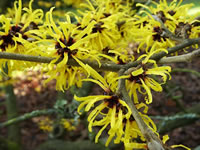 Chinese Witch Hazel Hamamelis mollis   Witch Hazel is one of the earliest of all blooming shrubs, providing you with up to eight weeks of showy, fragrant flowers in the dead of winter. The foliage turns to a bright yellowish-orange in the fall. Branches that have already formed buds can be cut and forced to bloom indoors using the same method you used to force Forsythia or Quince sprigs. Hardy in zones 4-9 |
January 15, 2012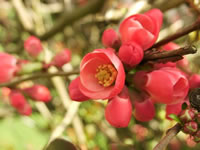 Flowering Quince Chaenomeles speciosa    For a few brief weeks in late winter and early spring, when there is little to enjoy in the garden, the Flowering Quince bursts into brilliance as the brightly colored flowers emerge from the leafless stems. Branches from the previous year can be cut in late winter and forced into bloom indoors. Hardy in USDA zones 4-9 |
January 22, 2012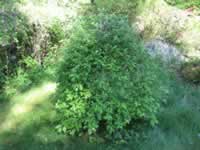 Weeping Pussy Willow Salix caprea  For an early indoor bloom, cut branches from Pussy Willows can be brought in the house and set in a water filled vase in a sunny window, anytime after the middle of January. The catkins will develop and make an nice, long lasting display. As with most species of Willow, Pussy Willows grow best when given lots of water. Hardy in USDA zones 4-8 |
January 29, 2012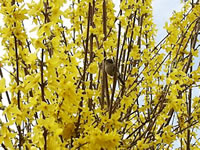 Golden Bells Forsythia intermedia One of the earliest signs that spring has arrived, is when the Forsythia bursts into a profusion of yellow blossoms spreading from the ground to the tip of each graceful, cascading branch. They vary in size from a compact, one foot plants to 8-10 feet in height and width. Forsythia branches can be cut and forced to bloom indoors. Hardy in USDA zones 4-9 |
February 5, 2012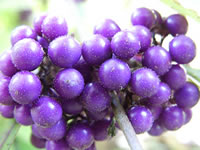 BeautyBerry Callicarpa bodinieri  The foliage of the BeautyBerry plant is a beautiful bronze color as it emerges, but soon turns to a bright green. Small lavender flowers produce clusters of berries which ripen to an intensely purple color, and remain on the plant after the foliage drops, providing a beautiful contrast during the winter months. Hardy in USDA zones 6-8 |
February 12, 2012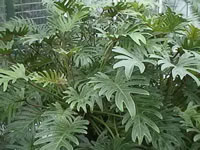 Philodendrons Philodendrons are among the most popular, tolerant, and durable of all house plants. There are many different species of Philodendrons, each possessing it's own characteristics as to leaf size, shape or coloring. Some species climb while others remain in more of a shrub shape. What Philodendrons all have in common is there ability to survive neglect and adverse conditions. |
February 19, 2012 Camellia Camellias are long lived evergreen shrubs or small trees that can grow anywhere from 6-20 feet tall with up to a 10 foot spread, depending on the species and cultivar. They have glossy, dark green, 2"-4" foliage that is attractive even when the plant is out of bloom. The flower colors range from pure white to deep, dark red and there are even some bi-colored varieties. Hardy in USDA zones 7-10 |
February 26, 2012 Heather Calluna vulgaris Heather is a compact, shrubby, evergreen ground cover plant from Northern Europe that covers itself with spires of tiny, brightly colored bell-shaped flowers from late summer through fall. The tiny, brightly colored, bell shaped flowers appear on spikes that stand about 5"-10" above the foliage. There is only one species in the Calluna genus, but there are hundreds of cultivars Hardy in USDA zones 4-9 |
|
|
||||
March 4, 2012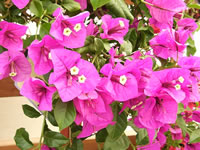 Bougainville Bougainvillea 'Purple Queen'    Bougainvilleas are fast growing, tropical, semi-evergreen vines from South America that produce cascading clusters of long lasting, brightly colored, petal-like bracts surrounding small tubular flowers from early spring through late summer. Bougainvilleas are also well adapted to growing in containers and they can be grown as house plants. Hardy in USDA zones 10-12 |
March 11, 2012 Shamrocks Oxalis There are over 500 different species of Oxalis that are commonly known as Sorrels or Shamrocks. Several species like the Silver Shamrock are very well behaved and make great additions to the garden as ground covers or as rock garden plants. Shamrocks are easy to grow in pots and planters. Many can be grown as house plants Hardiness zones vary |
March 18, 2012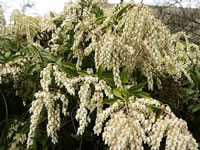 Andromeda Pieris japonica   The Andromeda Plant, Pieris japonica is a compact evergreen shrub that grows from 6-12 feet tall and wide. Pieris have leathery, 3-4 inch foliage that emerge coppery-pink, before turning to a deep green. The flowers open into cascading clusters of small, urn shaped flowers in February or early March. Hardy in USDA zones 4-8. |
March 25, 2012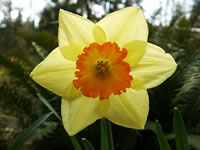 The Daffodil Narcissus 'Fortune' Daffodils are spring flowering bulbs that should be planted in the fall. When picking Daffodil flowers, the stem should always be 'snapped' off rather than being cut. Daffodils can be forced to bloom indoors at any time of the year after chilling the bulbs for 15-17 weeks. The flowers will appear 2-3 weeks later.Hardy in USDA zones 4-9. |
April 1, 2012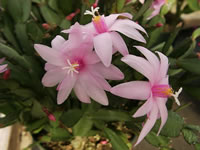 Easter or Spring Cactus Rhipsalidopsis
The Dwarf Easter Cactus, Rhipsalidopsis rosea produces soft pink, 1"-2" flowers. Rhipsalidopsis gaertneri produces bright red 2"-3" flowers. R. gaertneri has been vigorously hybridized with R. rosea and various Epiphyllums to create many new varieties with colors ranging from pure white to bright purple. Both species bloom early in the spring, and will occasionally flower again in the fall. Hardy in USDA zones 9-12. |
April 8, 2012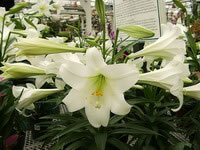 Easter Lily Lilium longiflorum Regardless of the season, Lilies growing inside the home they are a source of beauty and fragrance. Never place your Lily in a draft, or where it will be exposed to heat or dry air from fireplaces or heating ducts. When your Lily has finished blooming, keep it in a sunny location until all danger of frost has passed, when you can move it to a sunny location in the garden. Easter Lilies are very toxic to cats and other critters!!!! Hardy in USDA zones 6-11 |
April 15, 2012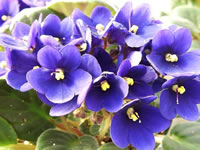 African Violet Saintpaulia ionantha
 African Violets were first collected from eastern Africa and Tasmania in the late nineteenth century. There are twenty species and thousands of hybrid African Violets in cultivation today. Their attractive, velvety foliage, compact growing habit and wide variety of long blooming flower colors have made the African Violet the most popular flowering house plants in the world. Unfortunately African Violets are only hardy in USDA zones 11&12. |
April 22, 2012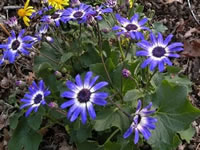 Cineraria Pericallis hybridus Cinerarias are tender perennials that are most grown as annuals or as short lived, flowering house plants. They form mounded clumps of bright green leaves that creates a nice accent for their vividly colored, Daisy-like flowers that stand above it in the spring and summer. In mild winter regions they are planted in the fall and begin blooming in late winter. Cinerarias are only hardy in USDA zones 9-11. |
April 29, 2012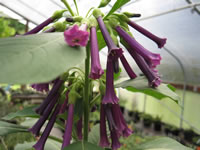 Violet Tubeflower Iochroma cyaneum Violet Tubeflowers are shrubby, evergreen plants that are sometimes called Mini Brugs, because they resemble Brugmansias. Tubeflower plants grow 3-5 feet tall, with a spread of 2-4 feet. They have large, velvety green leaves and produce clusters tubular, dark purple flowers from late summer until frost. Violet Tubeflowers grow well in containers and are an excellent addition to any Hummingbird Garden. Tubeflower plants are only hardy in USDA zones 9-11. |
May 6, 2012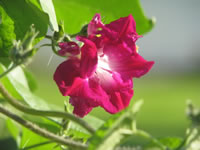 Morning Glory Ipomoea  Morning Glories are fast growing annual or tender perennial vines. They have light green, heart shaped leaves and produce a non-stop show of large, blue, pink, purple, red, or white, sometimes fragrant flowers from early summer until the first hard frost. Each flower only lasts for a single day or night. Morning Glory flowers will attract both Hummingbirds and Butterflies to your gardens. |
May 13, 2012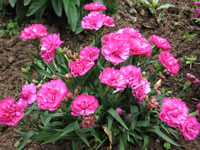 Carnation Dianthus x caryophyllus Carnations are members of the Dianthus genus. These deer resistant plants produce richly fragrant, double flowers in the spring or summer, sometimes extending right up until the first frost. Carnation plants grow and bloom best in cooler climates. They should be grown in in slightly alkaline soil, in a spot where they will receive at least 4-5 hours of full sun each day. Carnations are only hardy in USDA zones 8-10. |
May 20, 2012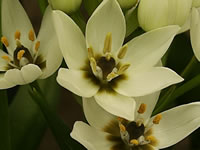 Star of Bethlehem Ornithogalum arabicum The Star of Bethlehem is a bulb type plant that produces upright clusters of fragrant 1-2" flowers in early summer. Ornithogalums can be grown in containers or as a House Plant. These plants grow best in full sun but will tolerate partial shade in hotter regions. Well draining soil is essential or the bulbs may rot rather than blooming. The Star of Bethlehem is hardy in USDA zones 7-9. |
May 27, 2012 Periwinkle Vinca species Periwinkles are fast growing, evergreen ground cover plants with opposing pairs of glossy dark green or variegated, oblong to lance shaped, 1½"-3" leaves. They produce an abundance of single, 1"-2" funnel shaped flowers with five flared and flattened petals, beginning in mid-spring and continuing throughout the summer. Hardiness zones vary. |
June 3, 2012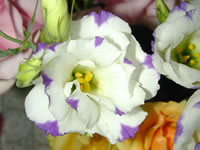 Prairie Gentian (Lisianthus) Eustoma grandiflorum Lisianthus are biennial or short lived tender perennial wildflowers that are native to the high prairies from the southwest part of the United States to northern South America. They form small clumps of sturdy, upright, 18"-24" stems with evenly spaced pairs of 2"-3", bluish-green leaves. Each stem is topped with a cluster of 2"-3", bell shaped flowers from June through September. Hardy in USDA zones 9-11. |
June 10, 2012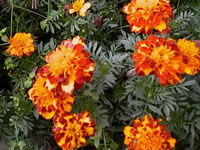 Marigold Tagates species   Marigolds are one of the easiest of all plants to grow and care for, making them a great plant for children to learn about gardening and growing. These spunky little plants are only hardy in USDA zones 9-11 so they are normally grown as annual bedding plants. Marigold plants start blooming by mid spring and continue producing their brightly colored single, semi-double or double flowers until the first frost in the fall. |
|
|
||||
June 17, 2012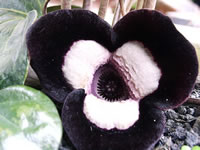 Wild Ginger Asarum species Wild Gingers are low growing perennial ground cover plants that are known for their showy, Cyclamen-like, heart shaped foliage and their very unique, three lobed flowers that hide from view below the foliage. Wild Ginger plants are an excellent choice for a shady woodland garden or border, and look superb when growing in containers where their flowers can be admired more easily. Hardiness zones vary. |
June 24, 2012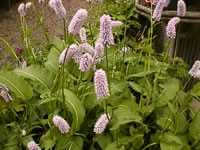 Knotweed Persicaria bistorta Knotweed plants are fast growing, easy to care for perennials with bright green, 4"-8" lance shaped leaves. They grow 2- 2½ ft. tall, and spread to form 3 ft. wide mounds. Knotweed plants produce 3"-6" spikes of tiny, pink flowers on leafless stems that rise above the foliage from late spring into early fall. Knotweed is an excellent ground cover plant, especially when grown along the edge of a pond, a stream or in boggy areas. Hardy in USDA zones 4-9. |
July 1, 2012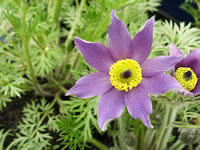 Pasque Flower Pulsatilla vulgaris Pasque Flower plants are deciduous, clump forming wildflowers that are native to the alpine meadows of western Europe. They have silky, finely divided, pale green fern-like foliage and grow 10". Early in the spring, before the foliage even emerges, they begin producing attractive, nodding, 2"-4", primarily purple flowers with conspicuous yellow centers. They are excellent plants for rock gardens, and can be easily naturalized into the landscape. Hardy in USDA zones 5-9. |
July 8, 2012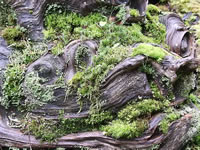 Ornamental Mosses Mosses grow naturally in most temperate areas of the world. They are primarily found growing in lightly shaded areas or where there are periods of sun in the morning or late afternoon. They make an excellent ground cover for shade gardens, accents for rock gardens or water features, and are a low-maintenance alternative to grass lawns. The compact nature and slow growth of many mosses make them very usable for creating a beautiful indoor landscape in a terrarium! Gallery of Mosses |
July 15, 2012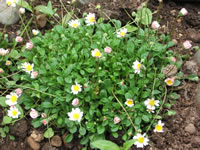 Miniature Daisy Miniature DaisyBellium minutum The Miniature Daisy plant is a vigorous growing, mat forming perennial with dense, bright green, 1" spoon shaped foliage. They only grow 2" tall, but will spread to about 18". From late spring through summer, Miniature Daisies cover themselves with tiny, ½" Daisy-like flowers on wirey stems. They are easy to grow ground cover plants for shaded areas or between flagstones, and can easily be grown in containers. Hardy in USDA zones 6-9. |
July 22, 2012 Golden Parrot's Beak Lotus maculatus The Lotus Vine, or Golden Parrot's Beak is a deciduous, tender perennial plant from the Canary Islands that is most often grown as an annual plant. Lotus Vines grow 6"-8" tall with a 3ft. spread. They are excellent plants for growing in hanging baskets or planters or as a creeping ground cover plant. Lotus Vines produce lots of bright, 1" golden yellow flowers tipped with red or orange from late spring through early summer and occasionally again in early fall when the temperatures cool. Only hardy in zones 10-11. |
July 29, 2012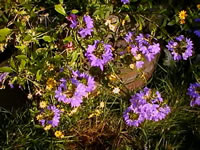 Fairy Fan Flower Scaevola aemula Fairy Fan Flower plants are fast growing, heat and drought tolerant, insect resistant, tender evergreen perennials that only grow 8"-12" tall but will spread up to 5 feet. They have light green, coarsely toothed foliage. The 1"-1½" flowers consist of five petals in a semi-circle fan shape, and are produced all along the fleshy stems from spring through fall. Fairy Fan Flowers grow well in planters and look great cascading down from hanging baskets. Only hardy in zones 9-11. |
August 5, 2012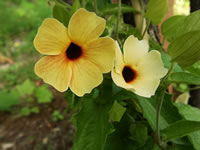 Black Eyed Susan Vine Thunbergia alata The Black-Eyed Susan Vine is a tender, evergreen, twining vine that is most often grown as a long blooming annual. If grown as an annual, they will quickly scramble up to a height of six feet. In frost free climates they can reach 20 ft. as long they have a support to grow on. They begin blooming in the early summer and continue to produce a profusion of brightly colored, bell-shaped flowers well into the fall. An awesome, blooming ground cover or for growing in planters. Only hardy in zones 9-12. |
August 12, 2012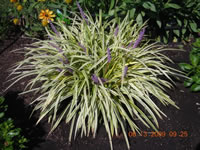 Lily Turf Liriope species Big Blue or Variegated Lily Turf (Liriope muscari) and Creeping Lily Turf (Liriope spicata) are semi-evergreen, grass like ground cover plants that grow as spreading clumps of fine, dark green or variegated leaves that turn to bronze-green in the winter. They are members of the Lily family that are closely related to the Mondo Grasses. Liriopes produce spikes of tiny flowers in late summer. They are excellent plants to grow in beds of spring flowering bulbs, where they will fill in as the bulbs fade. Hardy in USDA zones 4-10. |
August 19, 2012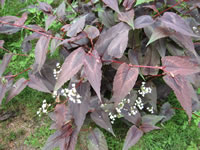 Red Dragon Fleeceflower Persicaria microcephala Red Dragon Fleeceflowers are fast growing, low maintenance, spreading perennials that grow 2-3 feet tall, with a 3 foot spread. They are known for their bright red stems and stunning, 3"-4", lance shaped, deep burgundy leaves accented with a central, silver or gray chevron. The foliage color intensifies in full sun or becomes less intense in areas with warm night temperatures, but in all cases the foliage will begin to turn to a coppery or dark green by fall. Hardy in USDA zones 4-9. |
August 26, 2012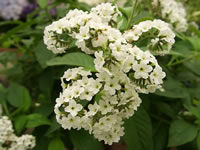 Heliotrope Heliotropium arborescens Heliotrope plants are frost tender, evergreen shrubs that are most often cultivated as fast growing, easy to care for, annual bedding plants. Heliotropes can also be grown in containers and over-wintered indoors. Heliotropes have attractive, 3"-4", dark green, lance shaped leaves with prominent veins but the main attraction is their 4" clusters of tiny, tightly grouped, funnel shaped purple, violet or white flowers throughout their entire growing season. The flowers have the sweet fragrance of vanilla or the aroma cherry pie... All parts of this plant are poisonous if ingested! Only hardy in zones 10-11. |
September 2, 2012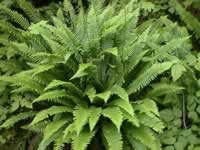 Deer Fern Blechnum spicant Deer Ferns are common forest ferns that resemble miniature Sword Ferns but they are smaller and have slightly rounded fronds. They are native to Europe, Northeast Asia and Western North America but unfortunately, these beautiful plants are now considered threatened in many parts of Europe. Deer Ferns are very durable and low maintainance plants which will eventually spread out to create an attractive three foot clump. Deer Ferns can be grown in difficult situations such as under evergreen trees or in deep shade. Hardy in USDA zones 5-8. |
September 9, 2012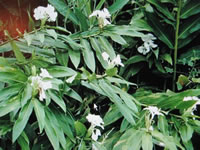 Butterfly Lily Hedychium coronarium The Butterfly Lily is a striking, tender perennial which grows to a height of 2-4 feet tall. The fragrant white or pink flowers which appear atop tall (5-8 feet) green stalks in the Summer and Fall resemble butterflies. The beautiful dark green foliage makes a great background plant for your landscape. It is a great addition to any Butterfly Garden Butterfly Lilies prefer light to partial shade. They should be grown in moist, well draining, fertile soil. Only hardy in zones 9-11. |
September 16, 2012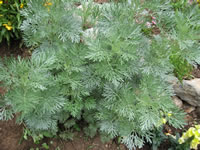 Powis Castle Artemisia Artemisia 'Powis Castle' Powis Castle Artemisias are shrubby, mound forming perennials are grown for their finely dissected, aromatic, silvery-blue foliage. Powis Castle plants are evergreen (eversilver?) in warm winter regions. Powis Castles are excellent plants for providing contrast and accent between groups of flowering plants, as well as for backgrounds or in the herb garden. They are very drought tolerant plants once established. They are deer resistant, and adapt well to growing near the seaside, or growing in planters. Hardy in USDA zones 6-10. |
September 23, 2012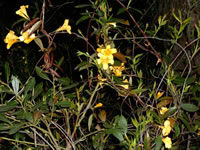 Carolina Jasmine Gelsemium sempervirens Carolina Jasmine plants are easily maintained, fast growing, climbing vines that grow to about ten feet. They have glossy green, lance shaped leaves and produce fragrant, 1½ funnel shaped, sometimes clustering yellow flowers for several months in early spring. They will usually bloom again in the fall. Although a moist soil is ideal, Carolina Jasmine is able to withstand short periods of drought. All parts of this plant are poisonous if ingested! Only hardy in zones 8-11. |
September 30, 2012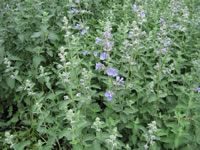 Catmint and Catnip Nepeta Catmint and Catnip are easy to grow, clump forming perennials with soft, aromatic, gray-green foliage that has an intoxicating effect on cats. Catmint (Nepeta faassenii) grows 1-2 feet tall with a spread of 18" and produces long, loose spikes of pretty, ½" violet-blue flowers from early summer into fall. Hardy in USDA zones 4-8. Catnip plants (Nepeta cataria) grow to 3 feet tall, with a spread of 1½-2 feet and produce 3"-4" spikes of tiny white flowers spotted with pale purple in the summer and early fall. Hardy in USDA zones 3-7. |
October 7, 2012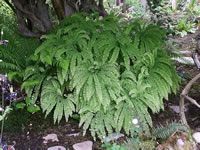 Pacific Maidenhair Fern Adiantum pedatum Depending on where you live, the Pacific Maidenhair Fern may be called an American Maidenhair or Northern Maidenhair Fern. This popular, deciduous fern from North America will add a bit of graceful elegance to any partial to fully shaded area of your garden. The distinctive, palmately fan-shaped fronds emerge as deep pink or burgundy colored fiddleheads in early spring before unfurling atop shiny black, wire-like stems that reach 18-24 inches. Hardy in USDA zones 3-8. |
October 14, 2012 Pin Cushion Plants Nertera granadensis The Pin Cushion Plant is also commonly known as a Bead Plant or Coral Moss. Nertera granadensis is a fast growing, creeping, tender perennial that produces an abundance of tiny orange berries just in time for your Halloween party! Pin Cushion Plants are an excellent choice for growing in containers. Indoors, they should be kept in a sunny location with a room temperature of 65-70 degrees. In hot summer regions, plant them in the garden in partial shade. Grow Nertera in gritty, fast draining soil. Only hardy in zones 9-11 |
October 21, 2012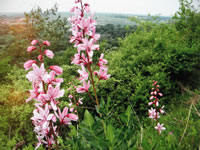 Burning Bush Dictamnus albus The Burning Bush, or Gas Plant as it is sometimes called, earned it's name because of the phenomina created by the fact that the leathery green leaves, flowers and seed pods give off a strong lemon scented vapor which, on a calm summer night can be ignited with a match. Burning Bushes are shrubby, perennial herbs that will grow to 24" to 36" in height and width. They produce spikes of 1½"-2" white, pink, or purple flowers in mid summer. Hardy in USDA zones 3-7 |
October 28, 2012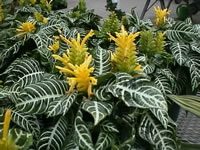 Zebra Plant Aphelandra squarrosa Zebra Plants are extremely showy evergreen plants with pairs of shiny, 6"-9", lance shaped green leaves, boldly variegated with cream, white or silvery striped veins. Under ideal conditions, they can be persuaded to bloom and will produce long lasting spikes of brightly colored yellow, waxy bracts with tubular white, yellow or orange flowers protruding from each bract. In their native Brazil, Zebra Plants can grow up to six feet tall and wide, but as a house plant they can easily be kept at 12"-18" by pruning. Only hardy in zones 11&12 |
| November 4, 2012 Zebra Plant Aphelandra squarrosa Zebra Plants are extremely showy evergreen plants with pairs of shiny, 6"-9", lance shaped green leaves, boldly variegated with cream, white or silvery striped veins. Under ideal conditions, they can be persuaded to bloom and will produce long lasting spikes of brightly colored yellow, waxy bracts with tubular white, yellow or orange flowers protruding from each bract. In their native Brazil, Zebra Plants can grow up to six feet tall and wide, but as a house plant they can easily be kept at 12"-18" by pruning. Only hardy in zones 11&12 |
November 11, 2012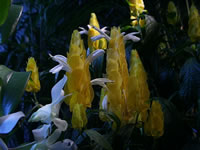 Golden Shrimp Plant Pachystachys lutea Golden Shrimp Plants are also known as Golden Candle plants or Lemon Lollipop Flowers. They are 18"-24" tall, shrubby plants that form clumps of upright stems that are each tipped with brightly colored, 4" golden yellow bracts that are adorned with small, creamy white flowers. The flowers are short lived, but the bracts will last for many weeks. Where they are hardy, Golden Shrimp Plants are popular as landscape plants that bloom nearly non-stop all year. In other areas, they are grown as annuals or as house plants. Only hardy in zones 10-12 |
November 18, 2012 Golden Shrimp Plant Pachystachys lutea Golden Shrimp Plants are also known as Golden Candle plants or Lemon Lollipop Flowers. They are 18"-24" tall, shrubby plants that form clumps of upright stems that are each tipped with brightly colored, 4" golden yellow bracts that are adorned with small, creamy white flowers. The flowers are short lived, but the bracts will last for many weeks. Where they are hardy, Golden Shrimp Plants are popular as landscape plants that bloom nearly non-stop all year. In other areas, they are grown as annuals or as house plants. Only hardy in zones 10-12 |
November 25, 2012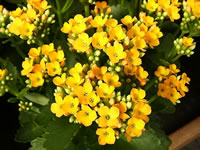 Flaming Katy Kalanchoe blossfeldiana Flaming Katies, or Kalanchoes as they are more often called, are easy to grow, winter blooming plants with waxy, green, scalloped edged leaves, and clusters of tiny, brightly colored flowers that continue for 6 weeks or longer. The true species Kalanchoe blossfeldiana grows up to 20" tall and has crimson red flowers but most Kalanchoes that are commonly available today are dwarf hybrids that only reach 8"-12" tall, with flowers in shades of red, pink, yellow and orange. Only hardy in zones 10-12 |
December 2, 2012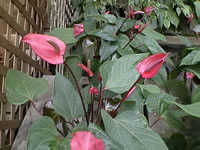 Flamingo Flower Anthurium species Flamingo Flower plants are durable and fairly easy to grow house plants that will thrive for many years under ideal conditions and can even survive for a year or two in the most adverse situations. They have large, deep green, lance or heart shaped leaves and produce long lasting, brightly colored, heart shaped flower bracts, resembling those of their close relative, the Calla Lily. Flamingo Flowers begin blooming in early February, just in time for Valentines Day! Anthurium plants are native to tropical regions of the Americas and are only hardy in USDA zones 11-12 |
December 9, 2012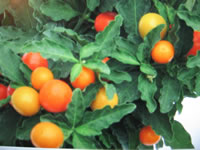 Jerusalem Cherry Solanum pseudocapsicum The Jerusalem Cherry or Christmas Cherry plant, as it is often called, is a perennial ornamental that belongs to a diverse family of plants that includes Nightshade, Tomatoes, Potatoes and Egg Plants. If you are lucky enough to live in a frost free zone, your Jerusalem Cherry will develop into a nice 2-3 foot, woody shrub. When grown as a house plant, Jerusalem Cherries require full sun to thrive, but they will survive in moderatly bright light. They are prone to drop their foliage and/or flowers if they are grown in a warm (above 72°), dry environment so it is a very good idea to mist your Christmas Cherry often! Hardy in USDA zones 8&9 |
December 16, 2012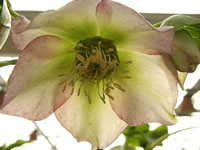 Christmas Rose Helleborus niger  According to legend, a young shepherdess named Madelon was tending her sheep one cold and wintry night. As she watched over them, a group of wise men and other shepherds passed by, bearing gifts for the newly born Jesus. Madelon wept, because she had no gifts to bring the Newborn King, not even a simple flower.... An angel, upon hearing her weeping, appeared and brushed away the snow to reveal a most beautiful white flower tipped with pink - the Christmas Rose. The Christmas Rose is one of the easier and most rewarding garden plants to grow, Their ability to bloom in the darkest months of the year when everything else is frozen solid make them a valuable asset to any garden. Hardy in USDA zones 4-8 |
December 23, 2012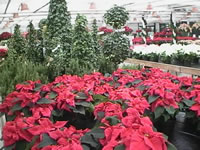 Poinsettia Euphorbia pulcherrima Indoors, Poinsettias require medium to bright light, but never full sun. They prefer to be kept on the cool side, 65°-70° during the day and 55°-60° at night. They will lose leaves if they are exposed to temperatures below 50° or above 80°. Keep your Poinsettia as far as possible from heat sources or cold drafts. If you want to grow your Poinsettia in the garden after the holiday season, make sure to keep it healthy while indoors. Avoid sudden temperature changes by moving it outdoors gradually after all danger of frost has passed. Only hardy in zones 10-12 |
December 30, 2012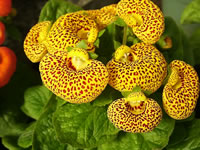 Pouch Flower Calceolaria crenatiflora  Calceolarias are commonly known as Pocketbook Plants, Pouch Flowers or Slipper Flowers. They are soft stemmed biennials that form compact, mounding plants that grow 6"-15" tall, depending on the cultivar. They have soft, light green, deeply textured 3" leaves with scalloped edges, but the foliage tends to disappear under the masses of unique, brightly colored, 1½" Pouch Flowers as they begin to open. Pocketbook Plants usually begin to show up in florist shops in the spring. With proper care, they will continue blooming indoors for several weeks but Calceolarias will seldom rebloom in the home. Only hardy in zones 9-11 |
The End... |
Search The Garden Helper: