How to Grow and Care for a Golden Bells
Forsythia Plant
      
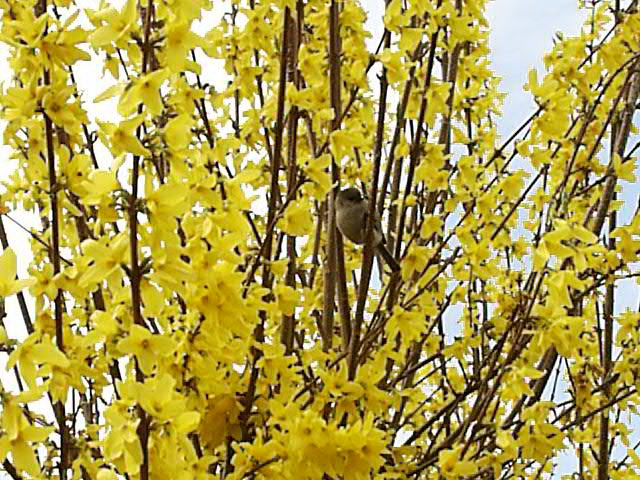
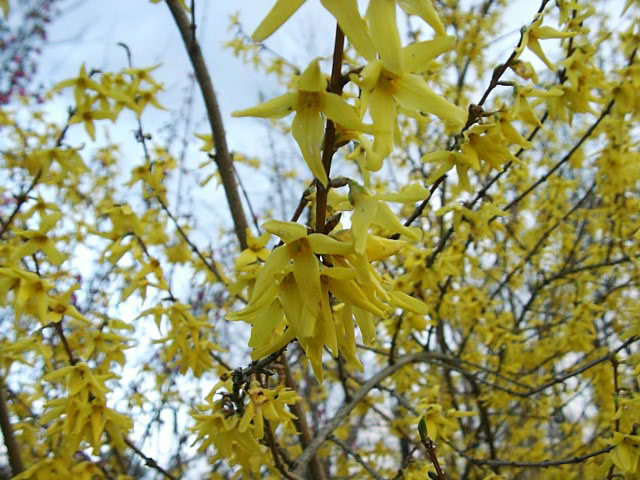
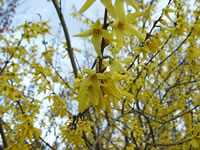
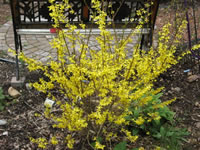
One of the earliest signs that spring has arrived, is when the Forsythia bursts
into a profusion
of yellow blossoms spreading from the ground to the tip of each graceful, cascading branch.
|

|
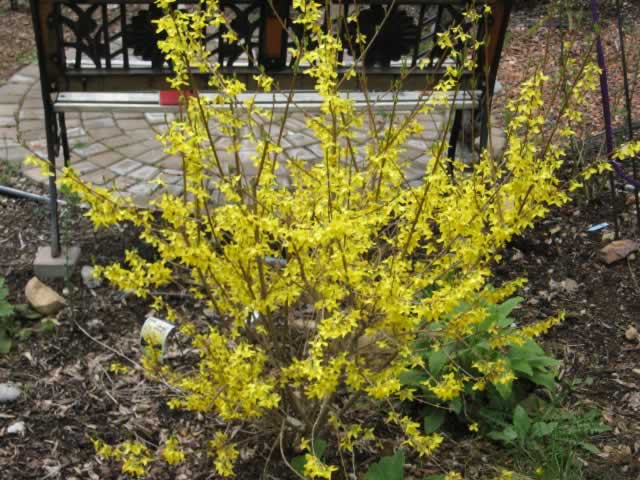
The Forsythia is a fast growing deciduous shrub that is hardy in USDA zones 4-9.
Depending on the variety of Golden Bells, they can vary in size from a compact one foot plant to others that can reach 8 to 10 feet in height.
Forsythias make excellent informal hedges, or may be planted as an individual specimen.
The taller varieties are easily espaliered against a wall or fence.
The branches can be cut and brought into the house in late winter.
In a week or two, you will be treated to an extra early flower bouquet.
Growing Requirements of a Forsythia
Forsythias thrive in full sun or light shade, will grow in almost any soil.
They are quite tolerant of the poor growing conditions and the pollutants found in cities.
Although Forsythias aren't really fussy about their growing conditions,
they will perform best when given optimum conditions. |
|
The soil should be well-drained. The addition of peat moss, composted manure, or garden compost
to the existing soil will get the plant off to a good healthy start.
Larger varieties of Forsythias should be given plenty of space to grow,
to fully appreciate the beauty of the natural cascading shape of a specimen sized plant.
Forsythias benefit from a light annual feeding of an all-purpose (10-10-10) garden type fertilizer,
applied in mid-February through mid-May.
Propagating Forsythia Plants
New plants can be started from softwood cuttings taken from new growth in late spring or early summer.
Another method of propagation is known as tip or ground layering.
This is done by pinning the tip of a branch to the ground where it will root.
Once rooted you can sever the new start from the parent plant, and transplant it elsewhere.
Preferably, Forsythias should be planted or transplanted during the winter dormant season
but new additions to your garden can be safely planted at any time of the year.
Pruning Forsythias
Forsythia flowers form on the previous season's growth not on new growth, so pruning should be done immediately after the flowers have faded.
Once your Forsythia finishes blooming, take a close look to see what pruning needs to be done.
Each year, you should prune back about one fourth of the oldest stems to within 4 inches of the ground.
If your Forsythia is drastically overgrown from years of neglect, it may stop blooming altogether.
If this is the case, you can cut the entire plant to
the ground.
It may take a few years before you'll see blooms again, but your shrub will come back, better than ever!
Forcing Forsythias to Bloom Indoors
By the end of the winter, most gardeners are longing to see a few fresh flowers.
One of the easiest ways to have a few winter blooms is to force a Forsythia branch. The best branches for forcing are those near the top of the plant, dotted with closely spaced buds. The larger the buds, the more quickly they'll bloom indoors.
Cut a whole branch all the way back to the stem.
Trim any buds and side branches from the area of the stem that will be submerged in the water.
Recut the stems at a long slant and place them in a vase of cold water in a cool place for two days.
Recut the stem again and move it into a vase of warm, fresh water.
Set the vase in a sunny window, and in a few weeks, you will have a golden bouquet to brighten your day.
These branches may root, if left in the vase for several more weeks.
When they have a substantial root ball, transplant them into pots, or directly into the garden if the weather has warmed sufficiently. |
|
Golden Bells
Forsythia intermedia
 |
 |
 |
|
|
|
Search The Garden Helper: