How to Grow and Care for a Lisianthus Plant, the Prairie Gentian
Eustoma grandiflorum, aka: Lisianthus russellianus
       
Lisianthus are biennial or short lived tender perennial wildflowers that are native to the high prairies
from the southwest part of the United States to northern South America.
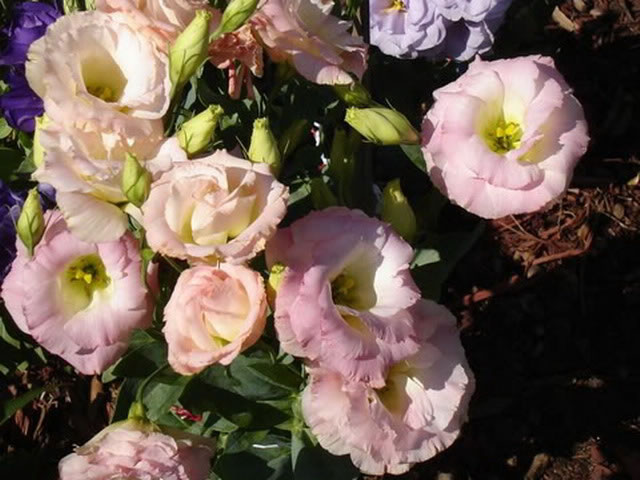
Lisianthus plants are also known as Prairie Gentians, Tulip Gentians and Texas Bluebells.
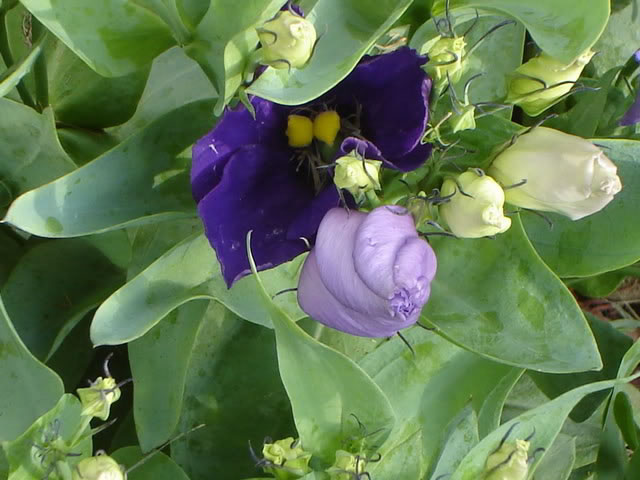
They form small clumps of sturdy, upright, 18"-24" stems with evenly spaced pairs of 2"-3", bluish-green leaves.
Each stem is topped with a cluster of 2"-3", bell shaped flowers from June through September.
Lisianthus flowers open in succession with each flower lasting more than a week.
|
 |
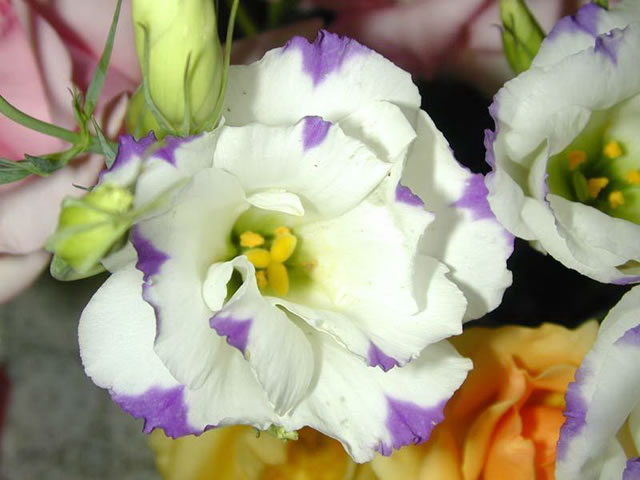
Hundreds of new hybrid Lisianthus have been developed for the cut flower trade that include bi-colored, double and semi-double flowers that last up to 3 weeks in a vase. They have also created 8" tall, dwarf varieties that make excellent flowering pot plants.
In cooler regions Prairie Gentians are quickly gaining popularity as an annual garden flower.
Growing Requirements for Prairie Gentians
Prairie Gentians are heat loving plants that bloom best where nights are warm.
They do not perform well in the Pacific Northwest or other areas with rainy, humid summers.
They can be grown in greenhouses for winter time cut flowers.
Lisianthus are only hardy in USDA zones 9-11.
Ideally, your Lisianthus should be planted in full sun, with some afternoon shade in hot summer regions. Lisianthus grow best in reasonably fertile garden soil, but it must be well-drained. |
|
The soil pH should be near neutral to slightly alkaline.
For the best results, water regularly and deeply to keep the soil evenly moist,
but well established Prairie Gentians will tolerate short periods of drought.
Eustoma are tap-rooted plants that resent being moved, so they should only be transplanted
when it is absolutely necessary, and this must be done with extreme care.
The blooming stems are very top heavy, so it is a good idea to provide stakes at planting time in wind prone areas.
Propagating Lisianthus Plants and Growing them from Seed
Lisianthus Plants can be propagated with softwood stem cuttings
taken in late spring or early in the summer.
Eustoma seeds require light for germination, so do not cover them!
Lisianthus seeds are as fine as a dust particle,
so if you are harvesting your own seeds, don't sneeze!
Most seed producers now coat their Lisianthus seeds and other tiny seeds with a gelatin like substance that dissolves as soon as it contacts water. These pelleted seeds are BB size and much easier to handle.
It will take about 5 months after sowing the seeds before your Prairie Gentian blooms, so seeds should be started indoors at least 10-12 weeks before your last expected frost date.
Sow the seeds in pots or trays of moistened potting soil. Barely press the seeds into the soil surface to ensure good contact.
Maintain a temperature of 68°-77° until germination, which will take 10-20 days.
|
|
Lisianthus seedlings are very slow growing and will take about two months to reach the four leaf stage.
At this point, pinch the tips to encourage branching (dwarf varieties do not need pinching),
then transplant 3 or 4 seedlings into each 6" pot.
Grow on in warm, bright light until your Lisianthus can be moved to the garden after all danger of frost has passed. |
Prairie Gentian aka: Lisianthus
Eustoma grandiflorum
 |
 |
 |
|
|
|
|
Search The Garden Helper: