How to Grow and Care for Poinsettia Plants in the Garden
Euphorbia pulcherrima
          
"My grandparents have received several poinsettias this Christmas season and my grandfather was wondering
if he could replant them in his yard and enjoy them for years to come and if he could, what should he do to ensure
that he gets the prettiest blooms next year. Thanks a lot." |

|
Growing Poinsettias Outdoors
Growing a Poinsettia plant outdoors generally requires a minimum temperature of about 45°, but they grow best when night temperatures are about 60°. Poinsettias are only hardy in
USDA zones 10-12, but will tolerate a VERY light frost.
In areas where the temperatures drop below this, I suppose that the most prudent method of keeping these holiday favorites growing year after year is to keep them in a sunken pot or container that can be brought into the house when the temperatures drop.
If you want to grow your poinsettia in the garden after the holiday season, make sure to keep it healthy while indoors by placing the plant in a sunny, draft free location and watering it when it is approaching dryness.
Avoid sudden temperature changes by moving it outdoors gradually.
When the leaves fall in late winter, cut the stems back to the two healthiest buds and reduce watering to the bare minimum.
When all danger of frost has passed you can move the plants outdoors.
|
Choose a well-draining location in full or partial sun preferably against a southern exposure wall to protect them
from strong winds which would quickly tear them to shreds.
When new growth begins in the spring, feed your Poinsettias with an all purpose water soluble fertilizer every other week,
or feed once, using slow release pellets. |
Poinsettias should be grown in soil with a slightly acid pH (6.5).
Root disease is a major problem with Poinsettias, so garden soil is NOT recommended if you are repotting your plant to a larger container.
Use only a sterile, lightweight, commercial potting mix.
Pruning Poinsettia Plants
CAUTION: Poinsettia sap may irritate your skin, so I strongly advise using rubber gloves whenever you are doing any pruning or pinching of these plants!
Poinsettias that are grown outdoors will often reach 8-10 feet tall, and can become quite leggy, so about every 2 months regular pruning is a must.
Pinching the tips of new growth will produce a much bushier plant with many more,
but much smaller flower bracts. |
|
| Thinning the branches out without pinching your Poinsettia will produce much larger flower bracts. |
Want to know where the Poinsettia came from?
How to care for a Poinsettia in the house?
How to force a Poinsettia to bloom again?
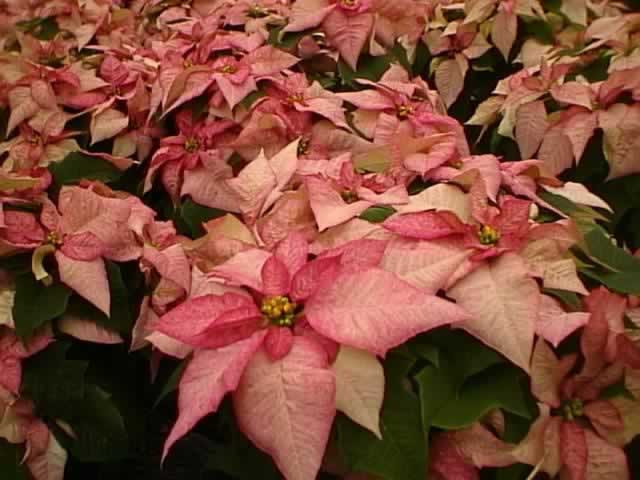
Poinsettias in Bloom
Euphorbia pulcherrima
 |
 |
|
|
|
Search The Garden Helper: