How to Grow and Care for Fairy Fan Flower Plants
Scaevola aemula
          
Fairy Fan Flower plants are fast growing, heat and drought tolerant, insect resistant, tender evergreen perennials
from Australia that only grow 8"-12" tall but will spread up to 5 feet in areas where they are hardy.
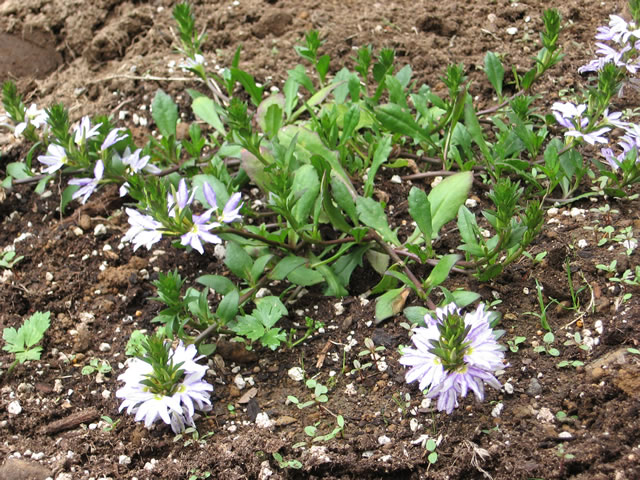
Fan Flowers are sprawling plants with light green, coarsely toothed foliage.
The 1"-1½" flowers, which are most commonly blue, consist of five petals in a semi-circle fan shape,
and are produced all along the fleshy stems from spring through fall.
|
 |
Fan Flowers grow well in planters and look great cascading down from
hanging baskets or from the top of a wall.
Growing Requirements for Fan Flower Plants
Fan Flowers are only hardy in USDA zones 9-11.
In cooler regions they are grown as annuals or in planters that can be brought indoors for over-wintering.
For the best results, Fan Flower plants should be grown in full sun.
They can be grown in partial shade but will not bloom as heavily.
Fan Flowers should be planted in loamy, slightly acidic, well-drained soil
that has been enriched with generous amounts of compost and peat moss.
Fan Flower plants tolerate periods of drought well,
but they bloom best if they are watered regularly.
When growing in containers, the soil should never be allowed to dry out completely, except if you
are over-wintering them inside, when the soil should be allowed to dry slightly. |
|
Feed your Fan Flower plants every 6 to 8 weeks while they are actively growing,
with a half strength solution of a soluble, all-purpose fertilizer.
Remove spent flowers clusters regularly to induce side branches to bloom.
Propagating Fan Flower Plants and Growing them from Seed
Fan Flower plants can be propagated with semi-ripe stem cuttings taken in late spring or during the summer months.
Fan Flower seeds are very small. They should be sown when fresh.
Sow Fan Flower seeds directly in the garden after all danger of frost has passed, barely covering the seeds with light, sandy loam.
Start seeds indoors 8-10 weeks before your last frost date.
Maintain a temperature in the growing medium of 70°-75° until germination, which can take from 30-60 days. |
|
Fairy Fan Flower
Scaevola aemula

|
|
|
|
|
|
Search The Garden Helper: