Insects and Pests that Infest and Damage House Plants
How to Identify and Control Them
Unfortunately, it is a fact of life that if you grow plants there will always be the possibility of an insect infestation of one sort or another. By taking a few simple precautions, you can lessen the chances of insects attacking your plants considerably...
- Always use clean pots and planters when repotting.
- Always use sterile potting soil. Using garden soil can have disastrous effects.
- Isolate any new plants for a month or so, and check them frequently for signs of insects or disease. This also applies to any of your plants that may have been outside for the summer.
- Promptly remove dead flowers or leaves from plants, and isolate any plants you suspect may be infested..
- Give your plant a bath now and then with a soft cloth and a little soapy lukewarm water.
- Examine your plants now and then, don't wait for them to start looking sad. Use a magnifying glass to look for mites.
- Proper feeding, care and fresh air make a healthy plant which is more resistant to insect problems.
It would be impossible for me to list every possible insect that attacks plants. The insects encountered the most often are white or red spider mites, aphids, mealybugs, scale, whitefly, thrips and many soil dwelling insects. If the problem is found early enough, it can often be taken care without the use of insectcides, and that is, by far, the best way.
Chemical Control of Insect Pests
I can't stress enough, the importance of reading the instructions and warnings that the manufacturer puts on the label. Especially the warning that says to use outdoors in a well ventilated area! Some pesticides which control insects can actually kill certain plants. Be sure that you are using the right product for the insect you have. Don't spray your plant once and forget it, check every week of so for signs of the return of the bug. Any single pesticide does not usually kill all pests and repeat applications are usually necessary. When used properly most chemicals are tested and safe to use. If you don't have to use chemicals, then please don't!
The pesticides listed here as remedies have been in use for many years, and are considered as traditional in the nursery and greenhouse industries.
I'm sure that there newer products that may work better but I don't keep up on such things. I'd recommend you visit the folks at Ortho and use their reference library to find more information about which chemical treatments are the safest and most effective for controlling specific insects.
Common Plant Pests
Aphids

Aphids are common on house plant insects but fortunately, are easily controlled. Aphids suck sap from the plant and can cause new growth to be stunted and distorted. Aphids may be just about any color and are found on new growth and the undersides of the leaves, usually clustered together in a group. Heavy infestations cover the plants with a sticky honeydew. If you can handle living with Lady bugs in the house, they will take care of any aphid problem for you. Aphids can also be controlled with malathion, diazinon, and systemic insecticides.
Spider mites

Spider mites are almost impossible to see with the naked eye. They are extremely small and a magnifying glass is usually needed to see them. They usually attack new leaves and buds. Plants infested with mites lose their green color and appear bronzed or washed out. In severe cases, the mites will form a fine webbing covering the underside of leaves. Once a plant is infested with mites, control will be difficult, if not impossible. Isolate your plant immediately, and dip it or spray it weekly with insecticidal soap. Systemic insecticides are sometimes effective if used soon enough.
Aside from using chemical sprays which specify that they will control spider mites, the only thing I could suggest would be good old soap and water.... Getting rid of the spider mites will take perserverance or you will just postpone the next infestation. I would try an organic insecticidal soap again, and the next day begin a process of spraying each plant, each day with as strong of a stream of water as you think your plants will withstand, making certain to spray the bottoms of the leaves.
Mites can reproduce each 3-7 days, so it is critical that you spray on a daily basis until the problem is under control. Dry air encourages spider mites to breed so anything you can do to increase the surrounding humidity will help you in your 'mite fight'.
Keep in mind that spider mites are NOT insects, so insecticides may not do any good at all, so be sure that the product you use is listed as being effective against mites, and follow the directions on the label.
Mealybugs

Mealybugs look like little white tufts of cotton so are often mistaken for a disease. They are normally found on the undersides of leaves or on stems at the apex of leaf joins. The white, waxy coating protects the insects from sprays, making control difficult. Touching each insect with a small brush or Q-tip dipped in alcohol will kill them, but the babies are very small and often overlooked, so a recurrence is possible. Be vigilante! Systemic insecticides may work. Diazinon is effective as long as the mealys are thoroughly wetted.
Whiteflies

The adult whitefly is a small 'white' fly. Their control is made more difficult by the fact that they will leave the plant as soon as you try to spray them. The immature stage of white fly is scale-like and doesn't move, so it is in this stage that you must defeat them by weekly spraying or dipping with insecticidal soap. Malathion and diazinon sprays are effective.
Scale insects

Scale insects often build up to large numbers because they go undetected. These insects are oval, about 3mm in length and look like small brown limpets.Their shell protects them from pesticides which makes their control more difficult. Scales are usually found on stems and the undersides of leaves but can be on top of the leaves. Small infestations can be removed by touching each insect with a cotton swab dipped in alcohol. Scales suck your plants juices, stunting the plants growth and they secrete a sticky honeydew which attracts ants and other pests. If it becomes necessary, spray or dip using malathion as directed.
Soil insects
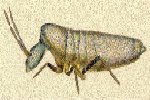
Soil insects are noticed when brought to the surface during watering. Adults and larvae of several insects may fly or crawl around on the soil surface. In most cases they do no real harm to the plant. Large populations can cause wilting and poor plant growth due to minor root pruning. A soil drenching with insecticidal soap will usually solve the problem. Systemic insecticides are usually effective.
Ants

The damage done by ants is usually indirect and actually caused by the aphids, mealybugs or other insects which they 'farm' for the honeydew. They can however cause damage to the root system of the plant as they burrow to build their nest. A soil drenching with insecticidal soap will usually solve the problem. Systemic insecticides are usually effective as are malathion and diazinon.
Thrips

Thrips are very small and hard to see. They are light brown, slender insects, who while in the adult stage will fly to other plants when disturbed. They 'rasp' into the leaves to obtain the plants juices, leaving the leaf distorted, with noticeable scars. Spraying with insecticidal soap will usually solve the problem. Spraying with malathion or diazinon is effective. Systemic insecticides are sometimes effective.