How to Grow and Care for Pasque Flower Plants
Pulsatilla vulgaris (syn: Anemone pulsatilla)
           
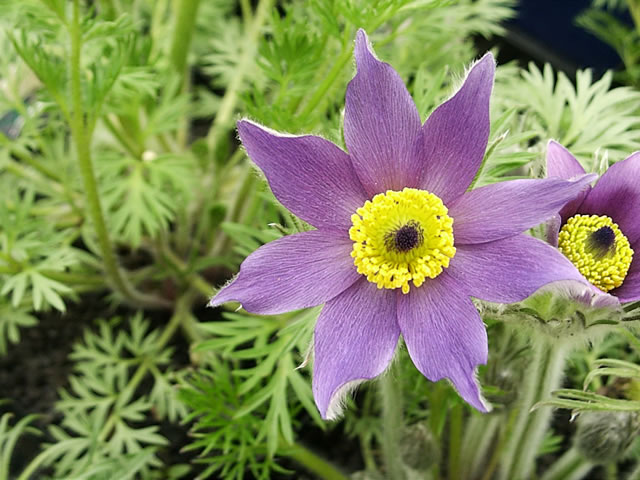
Pasque Flower plants are deciduous, clump forming, perennial wildflowers that are native to the alpine meadows of western Europe.
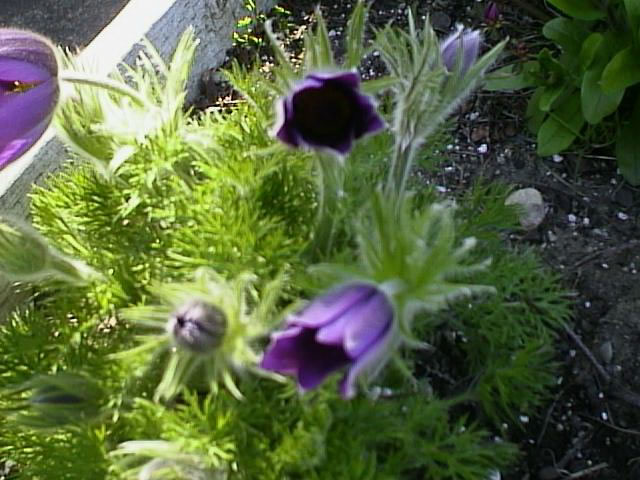
They have silky, finely divided, pale green fern-like foliage that grows 10" high, with a 12" spread.
Early in the spring, before the foliage even emerges, they begin producing attractive, nodding, 2"-4", primarily purple flowers with conspicuous yellow centers. The flowers are followed by showy, feathery white seed heads.
Pasque Flowers are excellent plants for rock gardens, and can be easily naturalized into the landscape.
|
 |
Growing Requirements for Pasque Flower PlantsPasque Flowers are hardy in USDA zones 5-9. They should be grown in a site with full sun except in hot summer regions where they should have light shade in the afternoon. Pasque Flowers can be planted in any average garden soil, as long as it is very well-drained, but they prefer gritty, humus rich soil so it is a good idea to add a generous amount of compost and granite grit or coarse sand at planting time.
Pasque Flowers have long tap roots and resent transplanting, so choose your planting site carefully so the plants can be left undisturbed. Plant in a spot with other tap-rooted plants like Butterfly Weed and Gaura to fill the break in flowering when your Pasque Flower goes dormant in mid-summer. Be sure to mark your Pasque Flower's spot with a stake before it goes dormant and disappears from sight, so you don't accidentally dig it up!
|
|
Water your Pasque Flower regularly and thoroughly during the first growing season to establish a deep, healthy root system. Remove spent flowers promptly to prolong flowering, but leave a few seed-heads on the plant
to allow you to collect and save seeds if desired.
Propagating Pasque Flower Plants and Growing Them from Seed
The roots of the Pasque Flower plant are easily damaged, so digging and dividing your Pasque Flowers should ONLY be done when absolutely necessary and then, it should be done during the winter. Root cuttings can be taken at that time.
Pasque Flowers self-seed readily and their seedlings can be transplanted to a permanent spot easily while they are still young. How easy is that?
Seeds can be sown directly in the garden in the fall, where they will germinate during the following spring.
Start seeds indoors in early spring. Maintain a temperature in the growing medium of 70°-75° until germination, which takes 3-4 weeks. |
|
Pasque Flower
Pulsatilla vulgaris
 |
 |
|
|
|
|
Search The Garden Helper: