How to Grow and Care for Swedish Ivy Plants
Plectranthus australis
       
Swedish Ivy is a fast growing, spreading, evergreen perennial plant from South Africa that is closely related to the Coleus. They are not from Sweden, nor are they a true Ivy (Hedera).
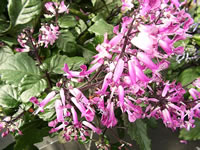
They have slightly rounded, waxy, glossy green, 1½"-2" leaves with scalloped edges, and produce 3"-8" racemes
of tubular, pink, lilac or white flowers on fleshy stems that rise above the foliage.
|
Growing Requirements for Swedish Ivy Plants
Swedish Ivy Plants are only hardy in USDA zones 9-11 where they should be
planted in moist, rich, well-drained soil, and grown in partial shade with a little morning sun.
In cool summer regions, they can be grown in full sun.
Water regularly and thoroughly while in active growth.
Top-dress with compost each fall.
Swedish Ivy as a House Plant
When grown as a house plant, Swedish Ivy is very adaptable, but needs lots of bright, indirect light, with a few hours of direct sun each day to keep the plant's growth from becoming leggy.
Swedish Ivy plants prefer to be kept somewhat rootbound but when it becomes necessary to re-pot them, they can be be planted in any good, fast draining, commercial potting soil.
The foliage of Swedish Ivy tends to lose its glossiness if the plant is kept too dry.
When your plant is actively growing, only allow soil to dry slightly between waterings before watering thoroughly. In the winter months, allow the top inch to dry before watering moderately. |
 |
|
Never let any house plant's soil to become soggy, or stand in water
for more than a couple hours to prevent root rot, which is usually fatal.
Feed your Swedish Ivy monthly from spring through summer, using a half strength solution of a soluble, all purpose fertilizer.
Pinch back the tips to encourage branching near the ends of stems.
Cut stems back hard to promote the overall bushiness of the plant.
Deadhead spent flower spikes promptly!
Your plant will enjoy spending the summer outdoors in the garden
but it must be brought back indoors before the temperature drops below 50°.
Swedish Ivy plants are susceptible to attacks from spider mites, scale insects and mealybugs, so inspect them regularly.
Propagating Swedish Ivy Plants and Growing them from Seed
|
Swedish Ivy Plants can be easily propagated with stem tip cuttings taken in the spring or summer and struck in moist potting soil or vermiculite.
Swedish Ivy often self-layers at any point where the stem comes in contact with soil. Layering is a fairly quick method of propagating new plants. Pin a stem node to the soil in an adjacent pot or tray, using a piece of stiff wire bent into a U. Cover the pinned area with moist soil. Once the layer is well rooted, it can be severed from the parent repotted.
Plectranthus seeds require light for germination.
DO NOT COVER THEM!
Sow seeds indoors at any time for house plants, or 8-10 weeks before planting them in the garden in late spring after temperatures reach 50°. Maintain a temperature in the growing medium of 68°-75° until germination, which takes 10-14 days. |
|
Swedish Ivy
Plectranthus australis
 |
|
|
|
|
Search The Garden Helper:
