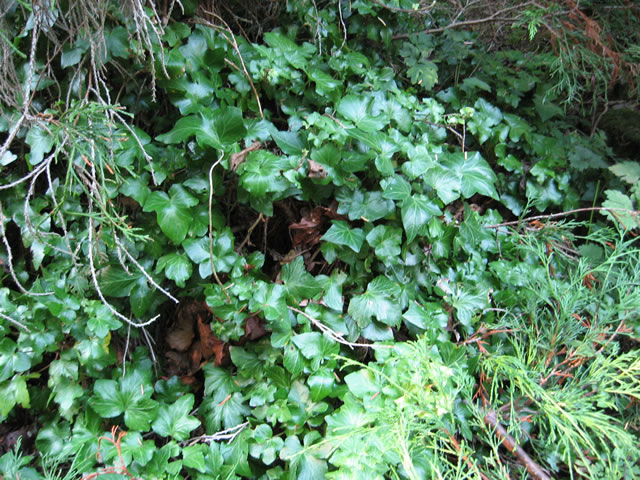
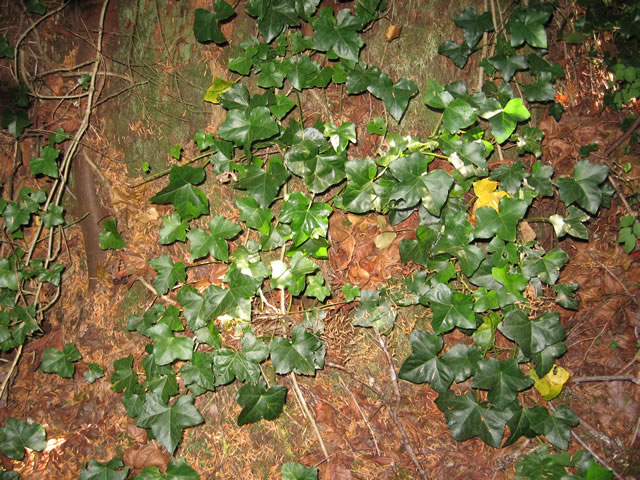
How to Grow and Care for Ivy Plants     Ivy is one of the most commonly grown ground cover plants in the world. It is also widely used as a climber to cover walls, fences and trellises. Species of IvyWhen they think of ivy, most people think of traditional English Ivy (Hedera helix), however the number of varieties of Ivy is enormous. Ivy species range in form from the huge 6-8 inch leaved Algerian Ivy (Hedera canariensis) to the tiny foliage of the hybrid 'Itsy Bitsy' or heart leaf ivy (H. 'scutifolia').The leaves may me crinkled as with the variety 'Curlilocks', or variegated types like 'California gold' (yellow, gold, and green) or Hedera helix 'discolor' (green and creamy white). |
||||||
|
||||||
Growing Ivy in the GardenPlant ivy in partial to full shade in well-drained garden loam enriched with peat moss, compost or leaf mold.
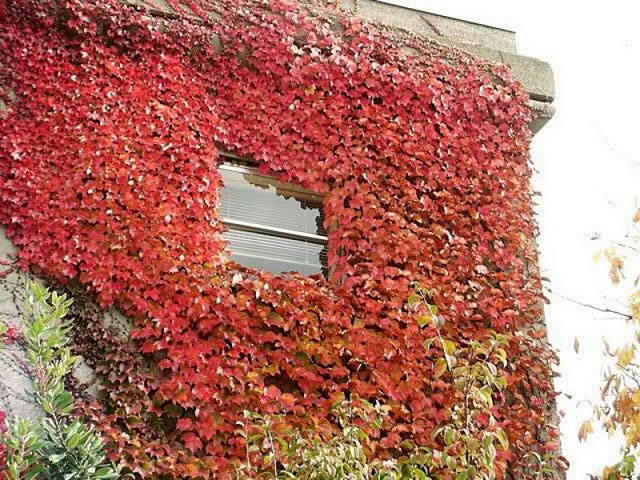
Growing Ivy as a Ground CoverAs a ground cover plant, Ivy is invaluable because of it's ability to discourage soil erosion. As the Ivy vine grows, it sets roots into the soil deeply and densely, and creates a network of roots which binds the soil, helping to prevent erosion and slippage on slopes. Ivy has the ability to climb almost any vertical surface, clinging by means of aerial roots. Once established Ivy plants will rapidly cover any wall or fence with lush evergreen foliage.Propagating Ivy PlantsDividing Ivy Plants. As with most perennials, you can divide the ivy clump by cutting through the mass using a sharp knife or your shovel, or just pull the root ball apart with your hands. Remove any dead or sickly portions and then simply replant.Softwood Cuttings. If time is not a consideration you can take softwood cuttings about 6 to 8 inches in length, remove the lower 2-3 leaves and insert the cutting into some damp sand or vermiculite. Keep it in a warm spot, and the roots should develop fairly rapidly (anywhere from 10-20 days) giving you a new plant. Tip Layering. If you intend to keep the plant in the same general area, you might want to layer the stems by just pinning the stem to the soil. The new roots will develop soon, and you can clip the stem between the old and new plant, after which you can remove the parent plant. Diseases and Pests that Affect IvyMost diseases that affect Ivy can easily be controlled by following sound gardening practices and with prudent and careful pesticide applications.Bacterial leaf spot and stem canker begins as light green spots which later turn brown or black. The leaf stalks become black and shriveled. Avoid high temperatures, high humidity, and wetting the foliage. Several different fungi can attack and cause leaf spots. Infected leaves can be easily picked off and destroyed. Watch for spider mites, mealybugs, aphids, scale and white flies.... Spider mites are very small and are very hard to see without a magnifying glass, but heavy infestations can cover the leaves with very fine webbing quickly. The plants gradually lose their green color and appear dusty or speckled. Submerging the plant in a solution of mild soapy water is often succesful in combatting spider mites. You can also use insecticidal soaps or use a house plant insect spray according to label directions. Mealybugs look like white puffs of cotton. They suck plant juices and heavy infestations will coat the leaves with sticky honeydew. Mealybugs can be tough to eradicate. They have a waxy covering which tends to repel liquids. I would suggest (and prefer for safety's sake) that you dab each individual insect with a Q-tip dipped in alcohol. Systemic insecticides and some house plant insecticides are sometimes effective, but be certain that it is appropriate to use them on Ivy plants. Always read the entire label of any pesticide or other chemical, and only use when it is absolutely necessary. You must be vigilante in rechecking your plants every 2 weeks or so to be sure that you have eliminated every trace of these bugs or you will quickly be facing the problem all over again. Aphids are small flea size insects which suck plant juices. They are usually found at the leaf axis or stem tips. A serious infestation will coat the leaves with sticky honeydew, which may then develop a black, sooty mold. Aphids can be green, white, pink or black, and are often accompanied by ants who farm them. Aphid are easily controlled with diligent use of rose dust or other suitable commercial remedies. Scale insects are usually light brown or tan. They have hard shells and attach themselves to the stems or undersides of the leaves. Sprays are usually not effective since the shell protects the insects. Heavily infested plants should be discarded immediately.
|
||||||
Search The Garden Helper: