|
|
|
|
|
|
How to Grow and Care for Black Eyed Susan Plants
Rudbeckia hirta
          
|
The Black Eyed Susan is typically an annual wildflower,
but there are some varieties that are perennial or biennial as well.
These native prairie flowers can be found growing wild in almost every state,
with the exception of the dry desert areas of the Southwest.
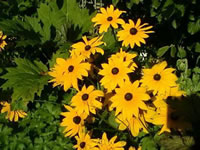
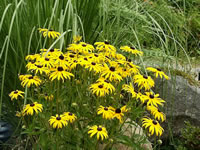
Black Eyed Susan's bright yellow, daisy-like flower grows to a height of 24-36 inches
and are excellent to use in cut flower arrangements and for
growing in your butterfly garden.
Rudbeckia hirta is also commonly known as a Gloriosa Daisy.
Growing Requirements for Black Eyed Susan Plants
Black Eyed Susan plants are hardy in USDA zones 3-10.
|
|
|
|
Rudbeckias are very adaptable to almost any type soil, but should be grown in full sun and watered regularly to achieve the best flowering performance.
Deadheading spent flowers will prolong the blooming period considerably.
Propagating a Black Eyed Susan
Perennial varieties of Rudbeckia can be propagated by division during their dormant season.
All varieties of Black Eyed Susan can be easily grown from seed which should be sown in the garden two weeks before the last expected frost
or started indoors 6-8 weeks before planting them outdoors in the Spring.
Rudbeckia seeds require light to germinate, so only lightly press them into the soil surface without covering them up. |
|
Black Eyed Susan Rudbeckia hirta
 |
 |
|
|
|
|
|