How to Grow and Care for Oriental Poppy Plants
Papaver orientale
           
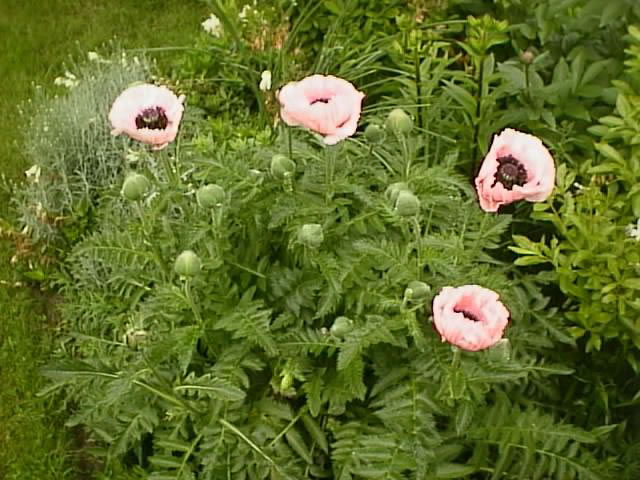
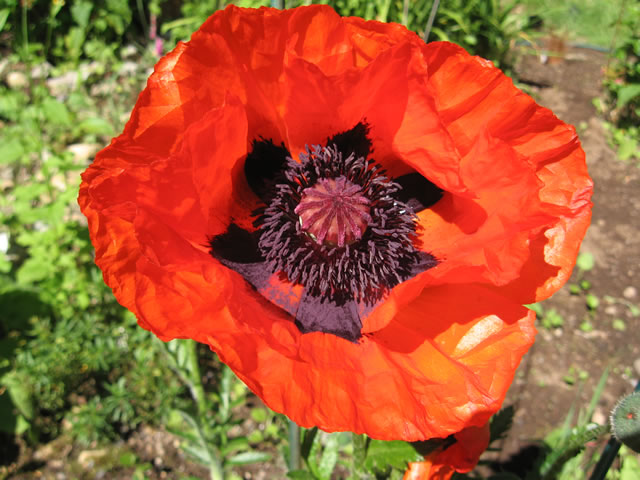
For generations, Oriental Poppies have been prized for their brightly colored, bowl shaped, 4"-6" flowers
that stand atop 2-4 foot tall stems.
These long lasting flowers have the texture of silky crepe paper, and are excellent for cutting.
Poppy plants form 18"-36" tall clumps of deeply divided green leaves that are covered with fine bristles.
These undemanding perennials slowly spread by rhizomes to form nice two to three foot colonies. |

|
Growing Requirements for Oriental Poppies
Oriental Poppies are cool climate plants that are hardy in USDA zones 3-7.
To bloom satisfactorily, Poppy plants must be grown where they will receive
a minimum of 8 hours of full sun each day.
Papaver plants have long, carrot-like roots, so dig and prepare your planting hole
to a minimum depth of 12 inches.
Bare-root Poppies should be planted with the top of the crown 3" deep.
Container grown plants should be planted at the same level they were growing at.
Poppies grow best in rich, evenly moist, but well-drained soil with a pH of 6.5-7.0.
Once established, Oriental Poppies are fairly drought tolerant,
but they flower best if given a deep, weekly watering when in bud or bloom.
Apply a slow-release fertilizer when new growth begins in the spring,
or add a side dressing to the plants with compost or well aged manure.
Apply a thick layer of mulch in the winter.
|
|
Poppy plants will go into dormancy, and the foliage will disappear after they finish blooming in mid-summer,
but they will resume growing in the fall to prepare for next years blooms.
Oriental Poppies should only be transplanted when they are dormant.
Using Poppies in Cut Flower Bouquets
Poppies should be cut just when buds start to open.
The cut ends should be seared to prevent the milky sap from leaking from the stems, and to prolong vase life.
Re-cut the stem and immediately dip the tip into 2" of boiling water for a few seconds.
Quick searing can also be done with a match or lighter.
Propagating Poppy Plants and Growing them from Seed
Because of their long taproots, Poppies are happiest when they are left undisturbed,
but every five years or so they may need to be divided.
The best time to divide Poppy plants is in early fall, just as new growth begins to emerge from dormancy.
Oriental Poppy seeds require light for germination, so do not cover them!
Poppy plants resent transplanting, so it is best to sow their seeds directly into the garden where they will grow, in late fall or early spring.
If you opt to start Poppy seeds indoors, maintain a temperature of 65° within the growing medium during germination, which takes from 10 to 15 days.
|
|
Oriental Poppy
Papaver orientale
|
|
|
|
|
|
Search The Garden Helper: