How to Grow and Care for Foamflower Plants
Tiarella cordifolia
        
Foamflowers are easy to grow, perennial wildflowers that are native to the
forests and woodlands of North America and eastern Asia.
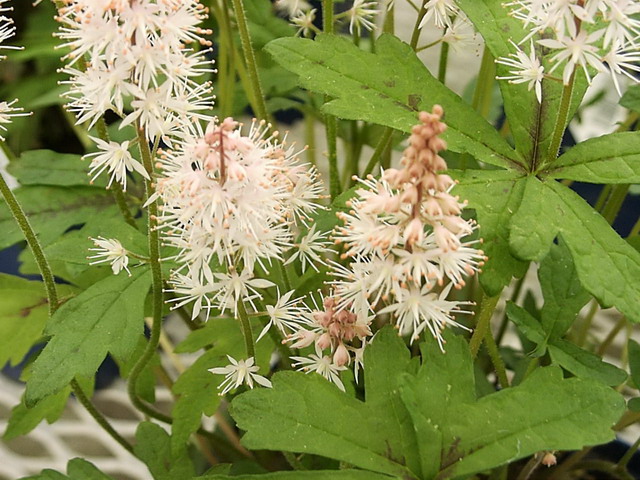
They form 6"-10" tall clumps of slightly fuzzy, deeply veined, heart shaped
or maple-like leaves,
sometimes with dark burgundy blotching.
They can quickly spread by rhizomes and runners to form nice two foot patches of this shade loving groundcover.
From early April into early summer, they produce whispy plumes of lightly honey scented, creamy white or pale pink,
¼" star shaped flowers that rise above the foliage on 12" wire-like stems.
|
In the winter, the foliage of your Tiarella will take on a nice orange-red hue.
Growing Requirements for Foamflower Plants
Foamflowers are hardy in USDA zones 3-8.
They perform best when they are grown in a cool, moist area where they will be in partial shade.
However, they will tolerate light sun or full shade as well.
The foliage color and blotching may be less bright when they are grown in deep shade.
Tiarellas should be planted 12" apart in rich, well-drained but moisture retaining, neutral pH or slightly acidic soil.
Foamflowers will not tolerate excessively wet soil in the winter.
Remove molding, dead or diseased foliage promptly.
|

|
|
Tiarella plants are closely related to Heucheras and can even be cross-pollinated with them to create new hybrids!
Propagating Foamflowers and Growing them from Seed
Foamflowers can remain undivided for several years, but when necessary they should be divided in early spring before flowering, or in late summer.
Foamflower offsets can be removed from the basal clump and treated as softwood cuttings, which will readily produce roots if they are misted regularly, or preferably, kept under a plastic dome.
Tiarella are easy to grow from seeds that can be collected when ripe
and sown into the garden immediately.
Start your Foamflower seeds indoors 8-10 weeks before the last killing frost. Maintain a temperature of 70°-75° within the growing medium until germination, which will take about 30 days. |
|
Foamflower
Tiarella cordifolia
|
|
|
|
|
|
Search The Garden Helper: