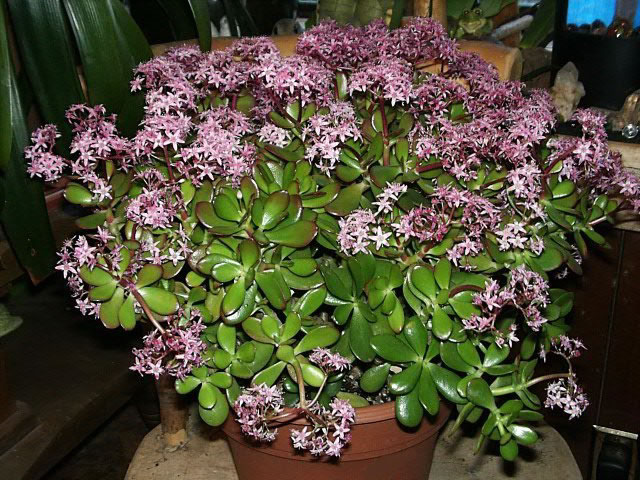
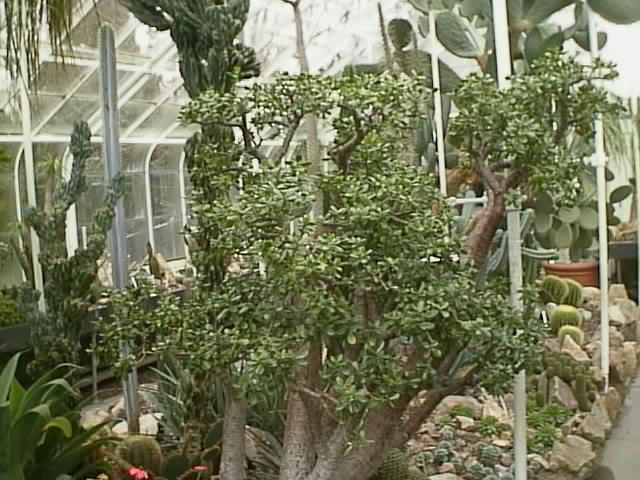
The Jade Plant originated in South Africa, and has been grown as a house plant
in Europe and America for a hundred years.
Generally, Jade plants are very easy and productive plants to grow,
provided that their needs are understood and met.
Growing Requirements for Jade Tree Plants
Jade plants should be grown in very bright sunlight and low humidity.
Jade trees will sunburn if they are suddenly moved from subdued lighting to full sun,
so if your plant is accustomed to dimmer light, be sure to move it into the sun in gradual stages.
Jade plants prefer an environment with temperatures between 55°F at night and
75°-80°F during the day. They will, however, tolerate temperatures down to 40°F.
Jades and all other members of the Crassula family are succulent plants, in that
they have the ability to store water in their leaves, stems and roots.
Jade plants have an active and a dormant growing cycle.
Watering and feeding should be determined by this growing cycle.
During the spring and summer months keep the soil slightly moist.
Water liberally (a good soaking) once a week, then allow the potting mix to dry out completely before watering again.
Immediately remove any excess water from pot saucer.
Feed your Jade plant with a 10-20-10 or 5-10-5 ratio soluble plant fertilizer every two weeks. (African Violet fertilizer works very well for most succulents.)
Keep your Jade Plant dry during the winter months while it is in dormancy.
Do not fertilize Jades from November through the end of March!
Getting your Jade Plant to Flower
Typically, all healthy, mature Jades will bloom,
usually around Christmas in the northern hemisphere.
Their blooming is triggered by the natural shortening of the daylight hours.
If your Jade Tree is in a room that usually has lights turned on at night,
it will
more than likely fail to bloom for you.
Sometime in September or early October, move your Jade plants, Christmas Cactus and last years Poinsettia into
their 'no night light' environment. Find a suitable area that seldom has the lights on at night but receives good, natural light during the day.
Check on them now and then to be sure they
aren't stressed from lack of, or from excess water.
Your plants will know what to do from that point on....