How to Grow and Care for Freesias
Freesia x hybrida
           
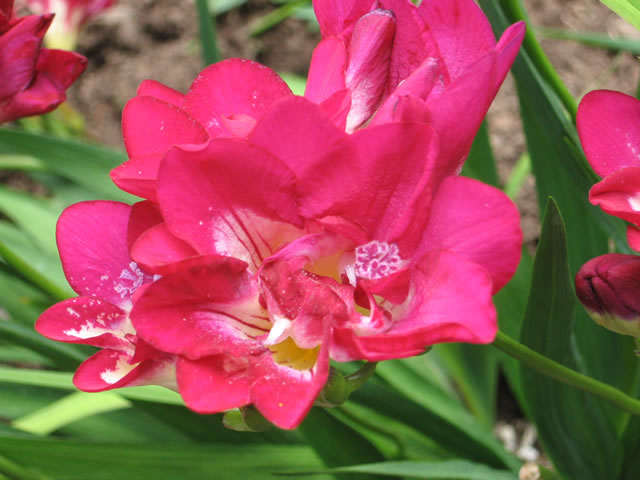
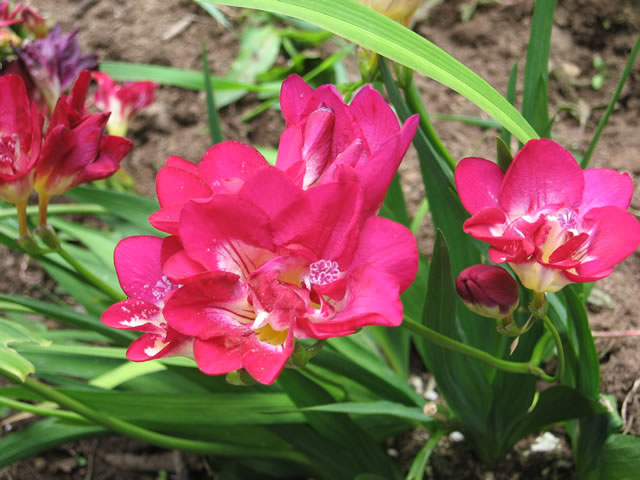
Freesias are tender, brightly flowered, easy to care for bulbs that can be grown in the garden,
in planters, or as a house plant in a sunny, cool room.
Their fragrant, 2" flowers open over a long blooming period, in sequence along 12"-18", arching, wirey stems.
They have narrow, sword shaped basal foliage and a few small leaves on each flower stem.
Growing Requirements for Freesia Plants
Freesias should only be grown in a spot where they will receive full sun for most of the day.
They should be planted in reasonably fertile, moist but well drained soil.
Prepare the planting hole by adding some coarse builder's sand and cultivating in peat moss, compost, ground bark or decomposed manure.
In the garden, Freesia bulbs (corms) should be planted 2"-3" deep and 3" apart, with the pointed end facing up.
|
Freesias are only hardy in USDA zones 9-10.
In these areas, the bulbs should be planted in late summer or early fall so that they can establish a good root system and begin blooming in early spring and finish before the summer heat sets in.
Freesias bloom best when night time temperatures remain below 50°.
In cooler regions, Freesias should be planted in mid-spring, after all danger of frost has passed.
Keep well watered all through the growing season, but allow the soil to slowly dry out when flowering stops.
Do not remove the foliage until it has died back naturally, to allow the leaves to capture
and the bulbs to store energy for next years show.
In areas where Freesias are hardy, the clumps can be left undisturbed for 3 years before dividing.
In cold climates, the corms will need to be dug after the foliage turns brown,
and stored in a cool, dry area until next spring.
Growing Freesias in Pots and Planters
|

|
|
Freesias make great container plants that should be planted in the spring for garden use, or planted in the fall for growing indoors.
When growing Freesias in pots or planters, drainage is critical!
Make certain the container has sufficient drainage holes to prevent waterlogged soil, or the corms will quickly rot.
Fill the container with any good, commercial potting soil and plant the bulbs 2" deep and 2".
It is a good idea to add a support stake at planting time, to avoid root damage later.
Keep the soil shaded and barely moist until new shoots appear, then water enough to keep the soil evenly moist, but never soggy.
Feed container grown Freesias weekly when actively growing, with a good soluble fertilizer, mixed at half the recommended strength.
|
|
Indoors, position your Freesia where it will get the maximum sun available.
Blooming time can be extended be keeping your plant in a cool area (50°-55°) at night.
Growing Freesias from Seed
Freesias grown from seed will take 8-12 months to bloom.
Freesia seeds should be soaked in warm water for 24 hours before sowing!
Seeds can be sown indoors at any time for growing as a house plant, or in late summer or early fall for planting outdoors next spring.
Maintain a temperature in the growing medium of 65°-75° F.
until germination which takes 25-30 days.
Freesias grown from seed will take 8-12 months to bloom. |
Freesia
 |
|
|
|
|
|
Search The Garden Helper: