Crocosmias, How to Grow and Care for Montbretia Plants
Crocosmia x crocosmiiflora
        
Crocosmia are easy to grow, corm type plants that are related to the Gladiola, Iris and Crocus. |

|
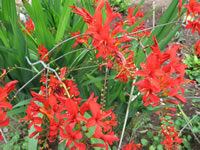
Crocosmias produce 36" stalks of brilliantly colored, tube shaped 2" flowers that
open sequentially up the stem from July until the first frost of fall.
A single plant can produce 8-12 stems, each with a hundred flowers that will last for weeks.
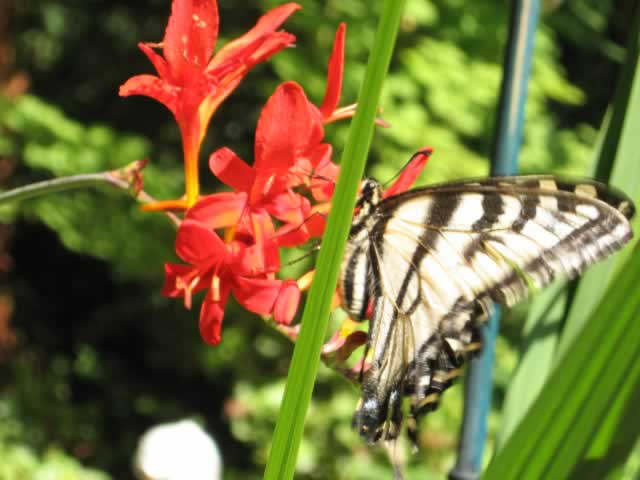
Montbretia are a favorite flower for Hummingbirds and Butterflies
Crocosmias are hardy in USDA Zones 7-11.
They can be grown, but not over-wintered in containers.
Your Crocosmia will die back to the ground in winter, but quickly regrow in the spring.
Growing Requirements for Crocosmia Plants
Your Montbretia should be grown in full sun or where it will receive light shade in the afternoon.
Plant your Crocosmia clumps 12"-18" apart in rich, moisture retaining soil that won't become waterlogged.
|
Individual corms should be planted 3"-5" deep and 4"-6" apart in late fall or winter.
Feed in the early spring with a balanced, bulb type fertilizer or top dress the soil with compost
and a handful of bone meal per square yard.
|
As with all bulb type plants, avoid high nitrogen fertilizers.
Once Crocosmia plants are established, they are fairly drought tolerant.
When your Montbretias have finished blooming, remove the flower stems, but leave the leaves on... even after they die back.
In colder winter zones, Crocosmia corms must be dug in the fall and stored indoors, as you would with Dahlias.
Dividing and Propagating Crocosmias
Montbretia need to be crowded before they will bloom profusely, but if they get too crowded, flowering will decline.
Crocosmias should only be divided every 3-4 years in late Autumn.
Replant the strongest corms immediately. |
|
Montbretia
Crocosmia crocosmiiflora
 |
 |
 |
|
|
|
Search The Garden Helper: